

Big Data Analytics in Dubai Real Estate: How to Invest with Data Driven Insights
Overview
Introduction: The Data-Driven Future of Dubai Property
Imagine trying to find a specific gold coin in a vast desert. That is what investing in Dubai real estate can feel like without the right tools.

The market is a ton of information. Sales prices, rental trends, who lives where, new project launches. The list goes on. And yet, many investors, buyers, and even experienced landlords tell me they feel more lost than informed.
You have the raw numbers. But turning them into a clear "buy now" or "wait" signal is the hard part. This is where the power of analytics and big data changes everything.
So, what is a data analytics approach for property? It is not just a buzzword. As experts note, big data analysis helps real estate companies and investors get accurate data in real-time. This means you stop guessing and start knowing. It builds a bridge between the huge amount of information out there and the clear, useful answers you need to make a confident choice.
Whether you are a buyer trying to time your purchase, an investor hunting for the next hot spot, a landlord setting the right rent, or a business looking for market intelligence, analytics big data gives you a clear picture. It helps you see if a neighborhood is overvalued, what the true demand is for a specific unit, or when the best time to sell really is.
In this article, we will break down the real concepts of data analytics for the Dubai market. No hard words. Just practical ways to solve your biggest problems and make smarter moves.
If you want to learn these skills yourself, there are amazing resources out there. You can start with our guide to free data analytics training for the Dubai market.
And if you are curious about the people behind the numbers, check out the key roles in entry-level data analytics jobs in Dubai real estate.
Ready to see what these insights look like in action? Explore Insights from our latest market reports.
What Is Big Data Analytics in Real Estate?
So what does analytics and big data actually mean for someone looking at Dubai property? It comes down to four big ideas: volume, velocity, variety, and veracity.
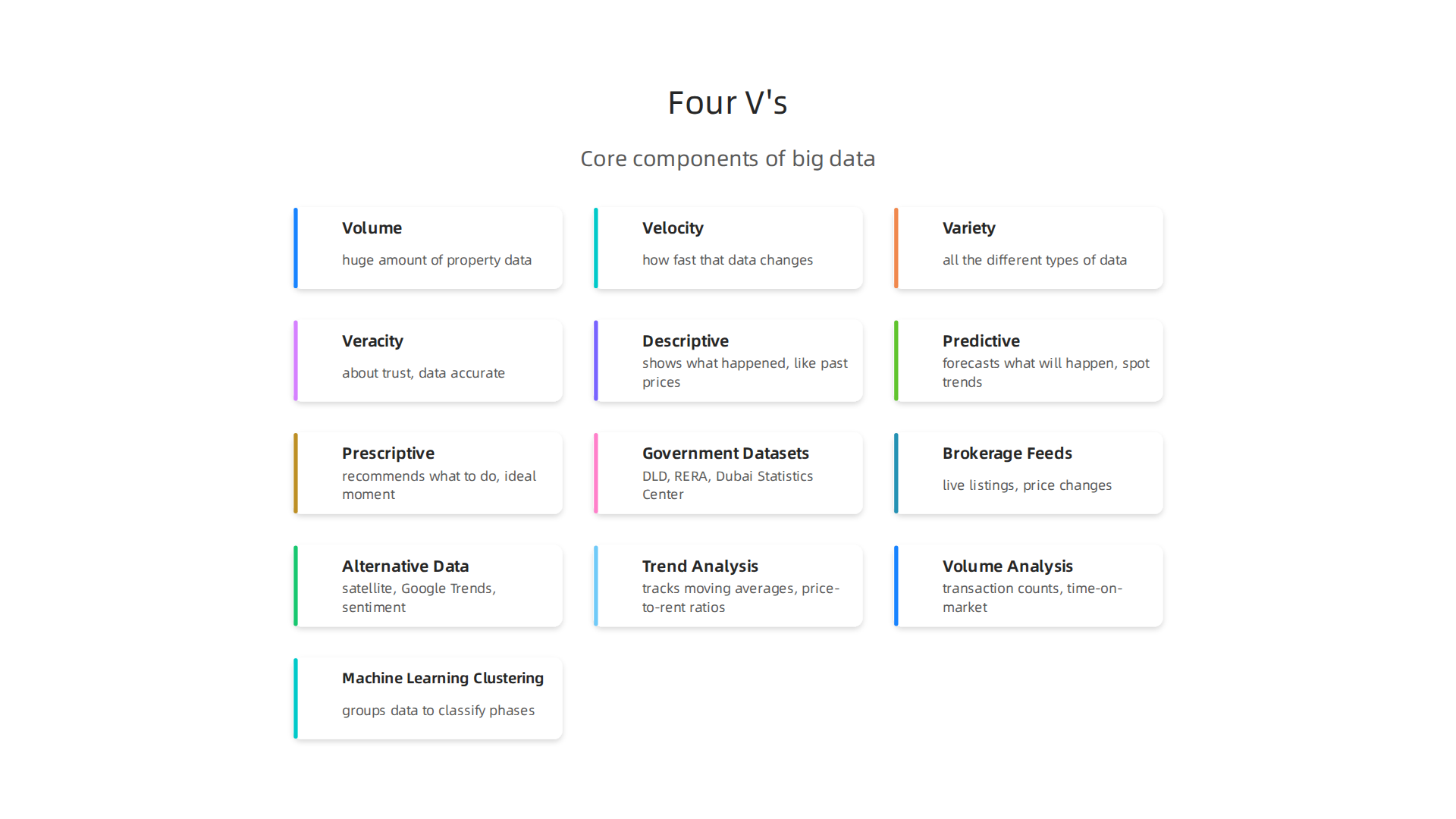
Volume means there is a huge amount of property data out there. Sales records, rental prices, tenant demographics, and infrastructure plans. Velocity is how fast that data changes. Prices shift daily. New projects launch weekly. Variety covers all the different types of data. Numbers, maps, text from news, even sentiment from social media. Veracity is about trust. Is the data accurate?
Analytics big data takes all that raw information and turns it into something useful. It moves beyond old-school descriptive statistics, which only tells you what already happened. Instead, it gives you predictive insights. It can forecast where prices are headed next. And with prescriptive insights, it can even suggest your best move.
Traditional market reports are often weeks or months old. They are static. But live, algorithm-driven intelligence changes everything. As experts note, big data analysis makes it possible to get accurate data in real-time. This empowers investors, developers, and companies to act fast.
Real estate companies and users can truly benefit from this technology. It helps you avoid making choices based on emotions or gut feelings alone. Instead, you rely on real signals.

Want to see how this works with actual Dubai market numbers? Explore Insights from our latest reports.
Volume, Velocity, Variety: The Three V’s in Property Data
Analytics and big data in Dubai property comes down to three V’s. Volume means millions of transaction records and listings. Velocity is real-time price changes and bid ask spreads. As experts note, big data gives you accurate data in real time Bright Data.
Variety covers structured data (prices, areas) and unstructured data (agent notes, social media). Understanding these three V’s is the first step toward using analytics big data effectively.
Want to dive deeper? Take a free data analytics training course tailored for Dubai real estate. And if you need personalized guidance, Connect with Ayaz Salman on Whatsapp for a free consultation.
From Descriptive to Predictive: The Analytics Maturity Model
Now that you know the three V’s, let’s see how analytics and big data grow in power. There are three stages.
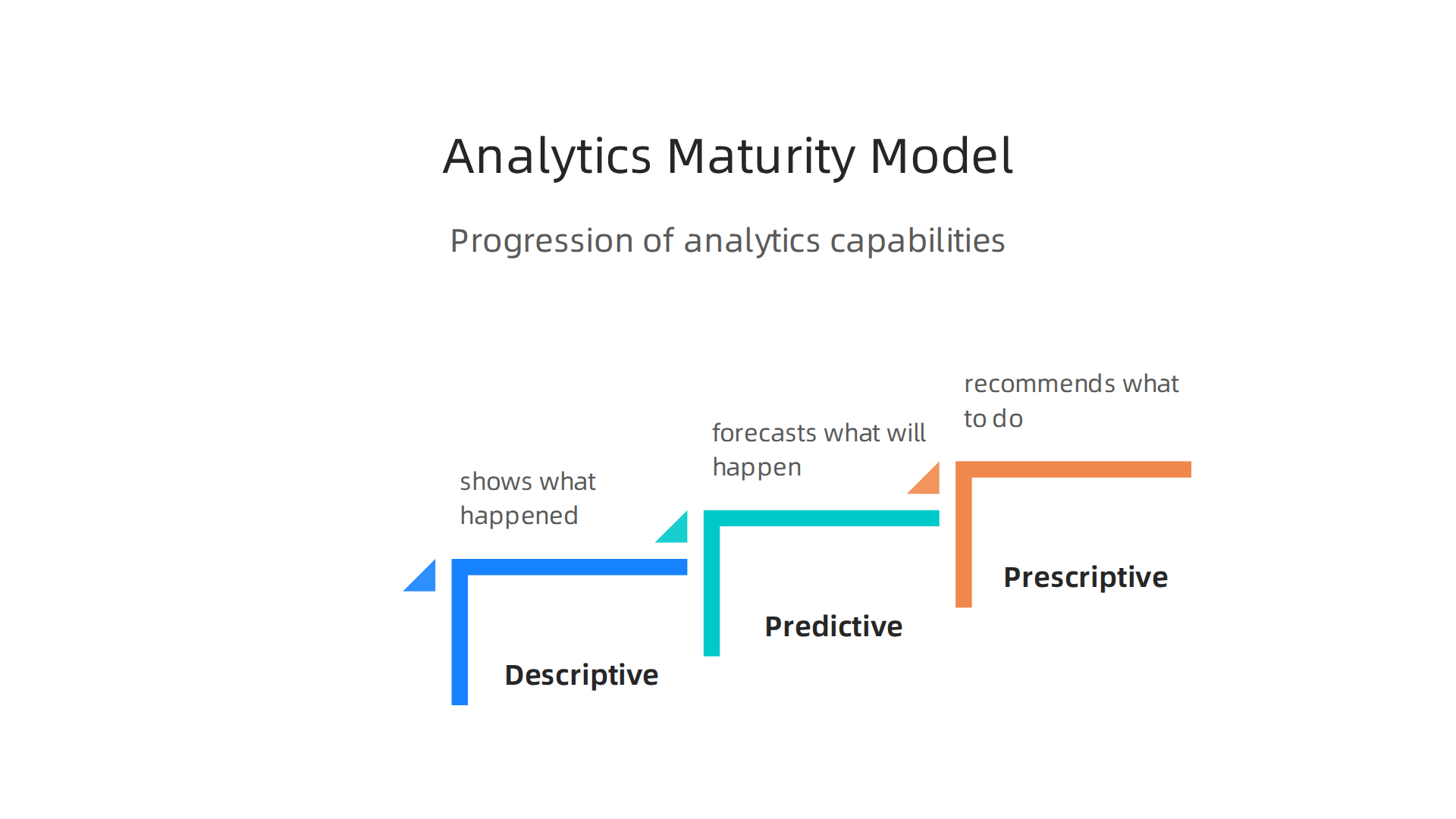
Descriptive shows what happened, like past average prices. Predictive forecasts what will happen, using real-time data to spot trends Bright Data. Prescriptive recommends what to do, like the ideal buy or sell moment.
To move up this ladder, take a free data analytics training course. It covers what is a data analytics and can lead to a certificate data analytics. Once you master analytics big data, you can make confident moves.
Connect with Ayaz Salman on Whatsapp for personalized guidance.
Key Data Sources for the Dubai Property Market
So where does all this smart data come from? You cannot run analytics and big data without good sources. For Dubai, there are three main buckets to know.
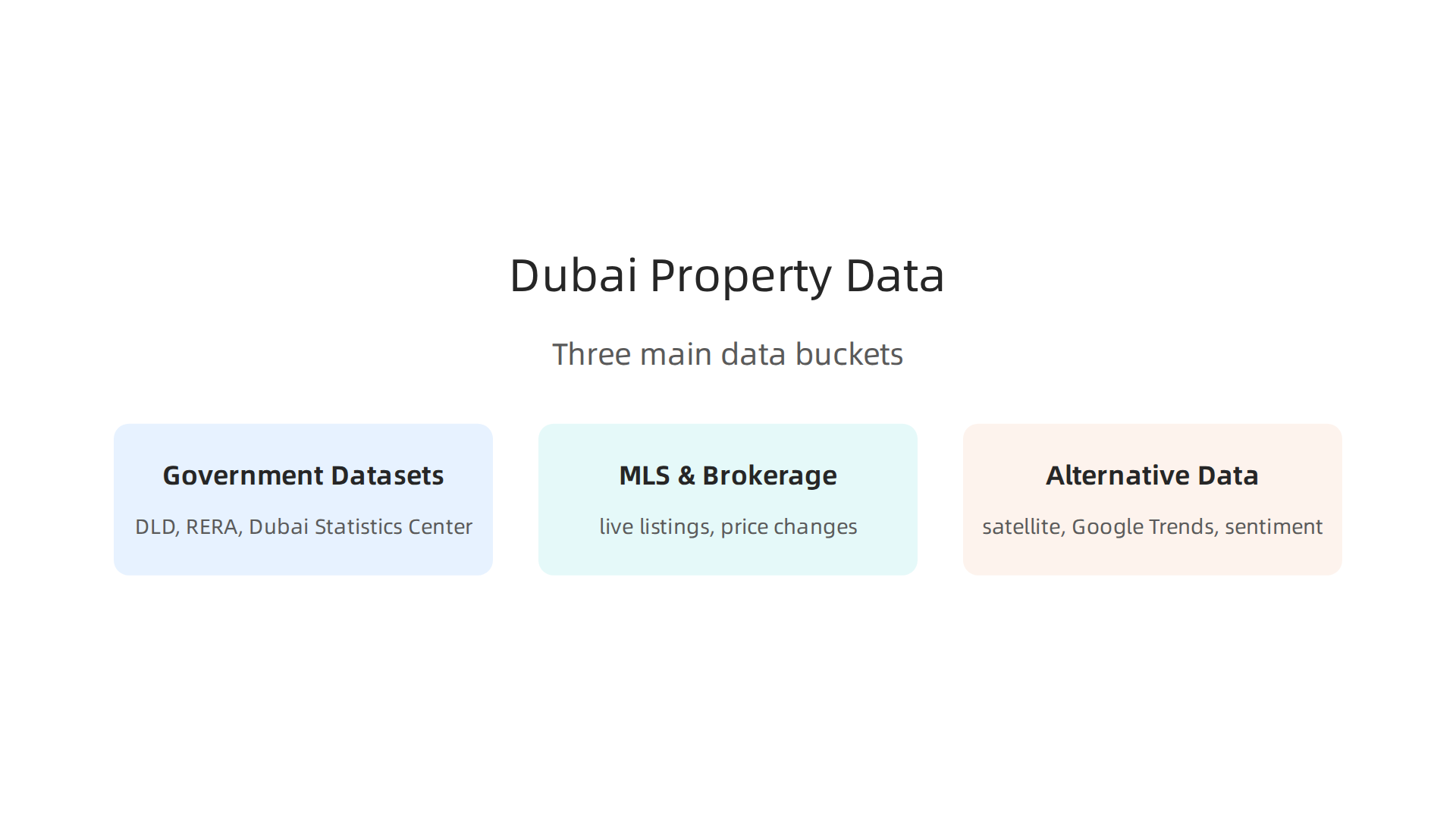
First, government datasets. The Dubai Land Department (DLD) is the gold standard. In Q1 2026, DLD reported property transactions surged 31 percent year-on-year, hitting record highs Gulf Business. RERA and Dubai Statistics Center also offer reliable numbers on pricing and supply. This is the backbone of any solid analytics big data strategy.
Second, MLS and brokerage feeds. Portals like Property Finder, Bayut, and Dubizzle show live listings, price changes, and demand patterns. They give you a real-time pulse on what buyers and renters actually want Engel & Voelkers.
Third, alternative data. Think satellite imagery tracking construction, Google Trends for search volume, and rental portals for yield estimates. These layers help you see what official numbers might miss.
If you want to learn how to pull and interpret these sources yourself, a free data analytics training course can get you started fast. And once you understand what is a data analytics, you can earn a certificate data analytics to boost your credibility.
Connect with Ayaz Salman on Whatsapp for personalized guidance on which data sources matter most for your next move.
Government and Regulatory Data
You might wonder where the most trusted numbers in Dubai real estate live. They come straight from the government. The Dubai Land Department (DLD) tracks every sale, mortgage, and valuation. In Q1 2026, DLD reported a 31 percent jump in transactions year-on-year, a clear signal for anyone using analytics and big data to spot trends Gulf Business.
RERA adds rental indices and strata data, so you know what tenants are actually paying. And the Dubai Statistics Center gives you population and economic figures that shape demand Engel & Voelkers.
If you want to learn how to pull and use this data yourself, a free data analytics training course can get you up to speed fast. That way you can turn raw government numbers into real investment moves.
Connect with Ayaz Salman on Whatsapp for help reading these official sources and finding the opportunities hiding in them.
MLS and Brokerage Feeds
Government data gives you the big picture. But for day to day pricing and property history, you need to look at listing feeds. Property Finder and Bayut are the two giants here. They offer detailed listing level data with pricing history and property specs. Brokerage APIs from major firms take it a step further with real time inventory.
If you are serious about analytics and big data in Dubai real estate, these feeds are a goldmine. They show you exactly what is for sale right now and what sold recently.
But there are challenges. Data standardization is inconsistent, duplicate listings are common, and historical depth is limited. You need to clean and cross reference the data to make it useful. That is why understanding what is a data analytics process matters here. A free data analytics training course can teach you how to handle these messy datasets.
For help turning raw listing data into a smart investment plan, Connect with Ayaz Salman on Whatsapp.
Alternative Data: Beyond Traditional Sources
Listing data tells you what is for sale now. But alternative data helps you see what is coming next. Satellite images can track construction progress or parking lot activity to gauge demand. Social media sentiment and web search volume reveal which neighborhoods are gaining buzz. IoT sensors in smart buildings measure energy use and foot traffic. These signals give you an early edge. According to the Gulf Business report, Dubai property transactions surged 31% in Q1 2026. Smart investors use analytics and big data to spot trends before the crowd. If you want to learn how to work with this type of data, a free data analytics training course can help you get started. To turn these insights into a winning plan, Connect with Ayaz Salman on Whatsapp.
Analyzing Market Cycles and Investor Sentiment with Big Data
Now that you know where to find alternative data, the next step is using analytics and big data to spot market cycles. Big data helps you detect whether the market is in expansion, peak, contraction, or trough. According to the Deloitte Insights 2026 commercial real estate outlook, the sentiment index scored 65 well above the 2023 trough of 44. That tells us the market is recovering and moving into a new growth phase.
Sentiment analysis adds another powerful layer. By scanning news, social media, and expert commentary, you can measure market mood in real time. The Morgan Stanley 2026 outlook points to a durable upcoming cycle with muted supply. The PwC Global 2026 report also shows investors targeting growth sectors. When you combine these signals, you can time your entry and exit with much more confidence.
If you want to understand what is a data analytics approach for real estate, start with a free data analytics training course. You do not need a full certificate data analytics to begin using analytics big data tools. For a practical next step, see how professionals apply these skills in entry-level data analytics jobs in Dubai real estate.
To put these cycle insights to work for your next property move, Explore Insights from our latest market reports.
Cycle Detection Through Data Patterns
You can confirm sentiment shifts with three data patterns. Trend analysis tracks moving averages, price-to-rent ratios, and absorption rates.
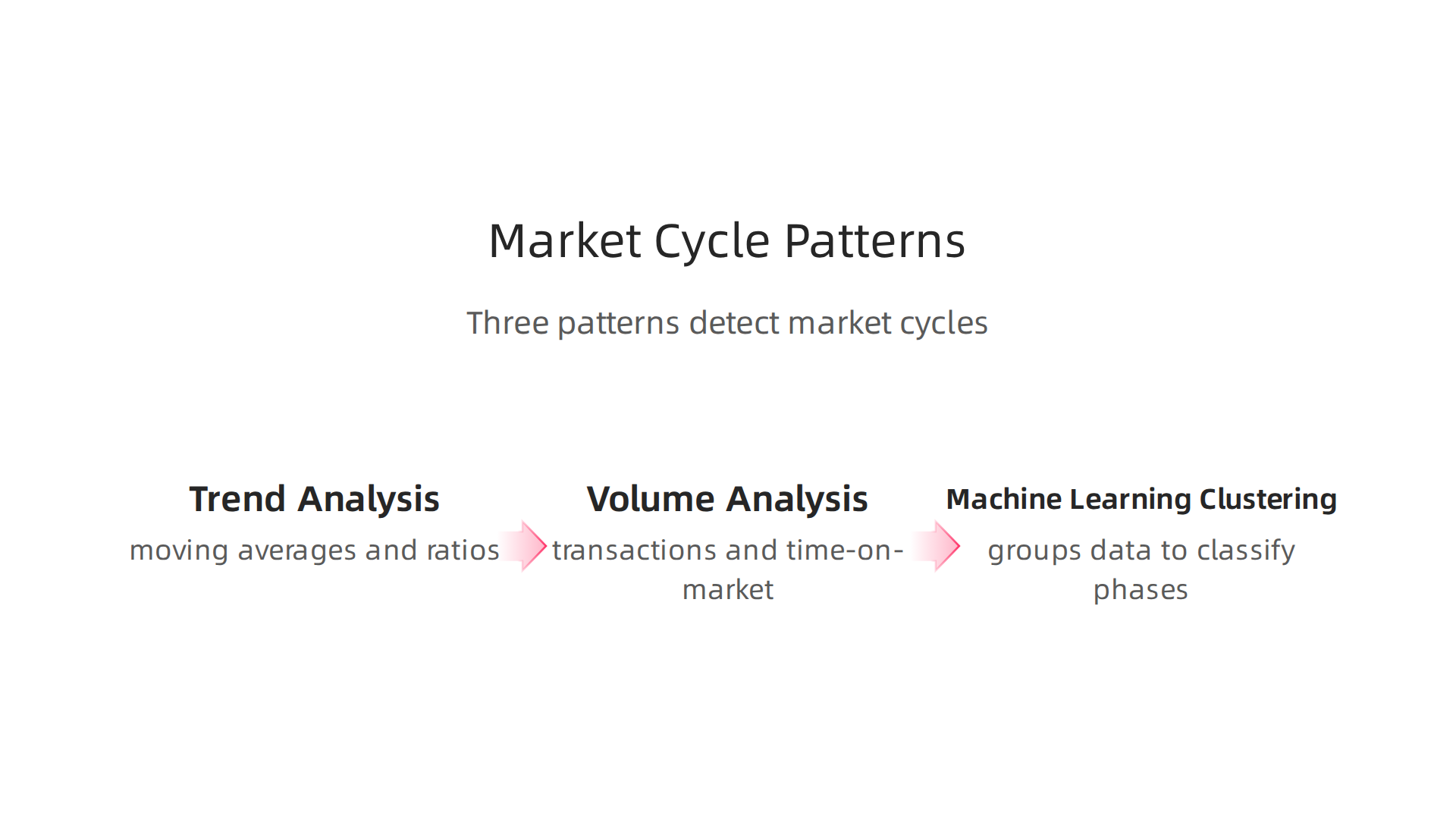
Volume analysis watches transaction counts and time-on-market. The Cotality report says transactions are stabilizing in 2026, a recovery signal. Machine learning clustering then groups data to classify cycle phases. This is analytics and big data in action. If you want to know what is a data analytics approach, try a free data analytics training course. You do not need a certificate data analytics to start.
Connect with Ayaz Salman on Whatsapp for personalized help timing your investment.
Quantifying Investor Sentiment
Numbers tell part of the story, but feelings drive decisions. To understand the mood behind the market, you can use Natural Language Processing (NLP) to scan news articles and social media for positive or negative tone. Survey-based indices, like the RERA sentiment survey, give you direct feedback from buyers and investors. You can also track derived metrics like Google Trends for searches like "buy property Dubai". The Deloitte 2026 commercial real estate outlook saw a sentiment index score of 65, well above recent lows, signaling cautious optimism. These techniques are a core part of analytics and big data in real estate. If you want to build these skills, check out a free data analytics course tailored for Dubai’s market.
Explore Insights to access timely market reports and understand what investors are feeling right now.
Predictive Analytics for Rental Trends and Buying Opportunities
Once you know how the market feels, the next step is using analytics and big data to predict what happens next. Predictive models can forecast rental yields, vacancy rates, and price movements by studying historical data. For example, a rental yield forecast uses past rent prices and vacancy trends to estimate future income [source: Sudduthrealty]. That insight helps you decide whether a property will generate strong returns.
Machine learning algorithms go even further. They can spot undervalued properties and tell you the best time to buy or sell. Researchers at the University of Florida showed how machine learning and big data improve the accuracy of real estate return predictions [source: Warrington UF]. This moves you from guessing to knowing.
These tools support real-world decisions like portfolio optimization. Should you hold, buy, or sell? Predictive analytics gives you the data to answer with confidence.

If you want to build these skills, entry-level data analytics jobs in Dubai’s real estate sector offer a great starting point [internal link: entry-level data analytics jobs].
For current opportunities, Explore Insights to access detailed rental trend reports and buying recommendations tailored for Dubai’s market.
Rental Yield Forecasting
As a landlord, you want to set the right rent. Set it too high, and tenants leave. Set it too low, and you lose money. Rental yield forecasting solves that problem by using analytics and big data to predict what rent you can charge.
This forecasting looks at several factors: historical rent prices, how often units sit empty (vacancy rates), new developments nearby, and big economic trends [source: Sudduthrealty]. Advanced models like time-series ARIMA or gradient boosting combine these factors into a reliable prediction [source: Mashvisor].
The result? Smarter pricing that maximizes your income and keeps tenants happy. To master these skills, check out a free data analytics course for Dubai real estate. And for real‑time rental forecasts tailored to your property, Explore Insights for detailed market reports.
Identifying Undervalued Properties
Finding a property priced below its true worth used to be a guessing game. Now, analytics and big data make this search much smarter. You can use comparable market analysis enhanced by big data to compare thousands of sales and listings instantly. This gives you a clear picture of fair value.
Automated valuation models (AVMs) use hedonic pricing to break down features like square footage, location, and amenities. They estimate a property’s real market price. Then, opportunity scoring combines price gaps with growth predictors to highlight properties likely to rise in value [source: rtslabs.com]. If you want to run these analyses yourself, check out this free data analytics training for Dubai real estate. And when you are ready to act, Connect with Ayaz Salman on WhatsApp for a free consultation.
Tools and Platforms for Real-Time Market Intelligence
To truly use analytics and big data for your advantage, you need tools that deliver real-time market intelligence. The best platforms combine multiple sources into one clear dashboard. This lets you spot trends and act fast. Several platforms in Dubai now offer this kind of live data [source: top luxury property article].
Dashboards pull together sales records, rental data, and economic indicators. They give you a single view of the market. Beyond that, APIs allow you to connect directly to data providers. You can build custom feeds that update automatically. This is useful if you want to track specific neighborhoods or property types.
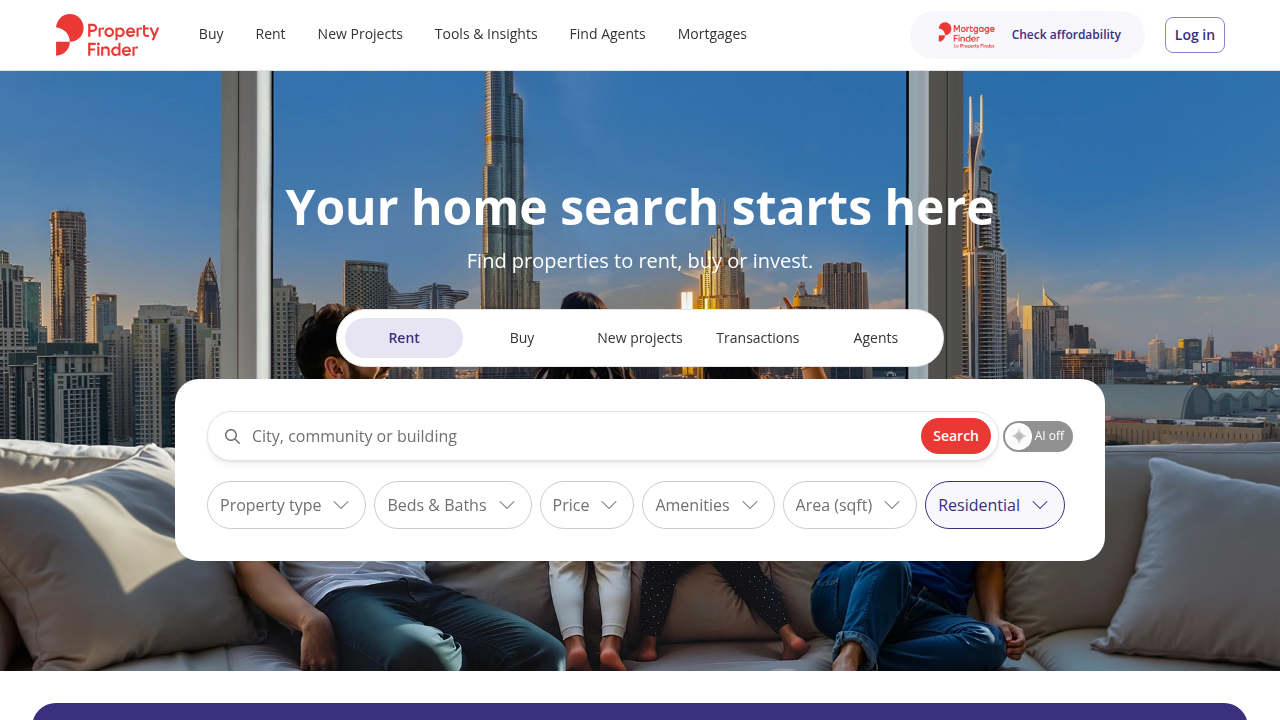
Examples include Property Monitor and Reidin. These platforms are well known for their deep market reports. Also, companies like Property Finder and SmartCrowd now offer real time data analytics for investors [source: IJFMR paper].
For government data, the Abu Dhabi Real Estate Centre provides an interactive map that shows property details and live trends [source: ADREC].
If you are new to data tools, start small. Learn how to read these dashboards and understand the numbers. A good first step is to explore our guide on entry-level data analytics jobs in Dubai real estate. It helps you build practical skills.
Ready to apply these tools to your next investment? Explore Insights for market reports, demand signals, and neighborhood analysis.
Dashboard Visualization and Alerts
Dashboards turn raw numbers into clear pictures. You see interactive charts that show price trends, inventory levels, and heat maps of demand. Instead of reading tables, you spot opportunities at a glance. This is what good analytics and big data tools do for you.
The best part? Customizable alerts. You set a trigger for price drops, new listings in your target area, or a specific threshold. When the market moves, you get notified immediately. No refreshing pages all day. Just timely action.
For example, a buyer might set an alert for a 5% price drop in Palm Jumeirah. An investor tracks rental yield changes across Dubai Marina. An agent monitors new off-plan launches. Each person gets a personalized view.
This kind of real time market intelligence is covered in this guide on data analytics in Dubai real estate from top luxury property experts. For deeper learning, check out this free data analytics course for Dubai real estate to master dashboard reading.
If you want to apply these tools to your next move, explore real time market reports and demand signals.
API Integration for Custom Analytics
Dashboards are great, but sometimes you need to go deeper. With REST APIs, you can pull raw data directly into your own models or spreadsheets. This is where analytics and big data tools really shine for power users.
Common sources include the Dubai Land Department (DLD) open data feed and the Property Finder API. These give you access to live transaction records, prices, and listing trends. As noted in a 2026 study, platforms like Property Finder have expanded by offering investors real-time data analytics https://www.ijfmr.com/papers/2026/1/68026.pdf.
But there are challenges. Rate limits can slow you down. You need to handle authentication securely. And API data schemas change over time, so your code must adapt.
If you want to learn how to work with these APIs, check out this free data analytics course for Dubai real estate. It covers the basics of pulling and analyzing property data.
Ready to apply these techniques? Connect with Ayaz Salman on Whatsapp for a free consultation on your property strategy.
Overcoming Data Challenges: Accuracy, Timeliness, and Trust
Even the best APIs can hand you messy data. Duplicate listings, stale prices, and underreported sales are common problems in Dubai’s fast-moving market. Without clean data, your analytics and big data models will give you wrong answers. So how do you fix it?

The first step is cross-referencing. Combine multiple sources like DLD records and listing platforms to spot gaps. Then apply data cleansing routines to remove duplicates and fill missing fields. Automated verification tools can flag suspicious entries in real time.
Transparency also builds trust. AI and big data tools that track where each number came from help you avoid bad decisions. A 2025 report on AI in Dubai’s real estate market shows how data provenance keeps your analysis reliable ^1. And predictive models in transparent markets like Dubai have shown strong accuracy ^2.
If you want to build these skills, check out the entry-level data analytics jobs in Dubai real estate page. It shows how professionals handle data quality every day and can help you understand what free data analytics training looks like in practice.
Still unsure about the numbers? Connect with Ayaz Salman on Whatsapp for a free consultation on your property strategy.
Ensuring Data Accuracy and Completeness
Even after cleaning data, you need to make sure it is complete and correct. Start with deduplication. Merge duplicate listings by matching addresses, property IDs, and photos. This stops you from counting the same villa twice.
Next, verify everything against official DLD records. The Dubai Land Department is the source of truth for sales prices and transaction dates. If a listing does not match DLD data, flag it as suspicious.
Finally, use machine learning to find outliers. For example, a rental price that is way too low or a sale price that does not match nearby properties. These models learn from historical patterns, so they catch mistakes humans might miss. Tools using AI and big data in Dubai’s market are getting better at this all the time ^1.
Want to learn how to run these checks yourself? Check out our free data analytics course for Dubai real estate to get hands-on with market data.
For the latest market numbers and verified property insights, Explore Insights on our blog.
Privacy, Compliance, and Ethical Data Use
Running analytics and big data on Dubai real estate also means following the rules. The UAE Personal Data Protection Law (PDPL) sets strict standards for how you handle property transaction data. You must anonymize any sensitive information like owner names or exact sale prices. This keeps people safe while still letting you spot market trends.
Clear data usage policies build trust too. When buyers and sellers know how you collect and use their data, they feel more comfortable sharing it. That trust makes your market analysis stronger.
New to this field? Check out our guide on entry-level data analytics jobs in Dubai real estate to learn how professionals handle compliance every day.
For the latest data practices and market reports, Explore Insights on our blog.
Summary
This article explains how analytics and big data are transforming Dubai’s real estate market and shows practical ways investors, landlords, and agents can use those insights. It covers the core concepts (volume, velocity, variety, veracity), the main data sources (government records, MLS feeds, and alternative data), and the analytics maturity from descriptive to prescriptive models. You’ll learn which tools and APIs power real‑time dashboards, how predictive models forecast rents and prices, and how sentiment and cycle detection help time investments. The guide also details data‑quality fixes, verification with DLD records, and legal/privacy considerations under UAE rules. Readers finish with clear next steps: where to find training, which platforms to try, and when to seek expert help for action‑ready signals.