
Dubai Real Estate Investment 2026 A Data Driven Guide to Market Cycles and Profits
Overview
Introduction: Navigating Dubai’s Dynamic Property Market
Dubai’s real estate market keeps proving why it is a top global investment hub. Just look at the first quarter of 2026. Total transactions jumped a massive 31% to hit Dh252 billion, according to recent reports. Those numbers sound great, right?
But here is the thing. The same period also showed signs of softening. Property market analysts noted that residential capital values were still up 8.9% year on year, but the rapid growth from previous years started to slow down. The market is shifting from fast expansion to a more measured, sustainable growth phase.
This creates a real problem for you if you are thinking about real estate investment. When you invest in Dubai, you need timely data on property cycles, rental yields, and changing regulations. Without that, making smart choices becomes a guessing game. Information is scattered across news sites, broker reports, and social media. It is easy to miss the signals that matter most.

That is exactly why we built this guide.
We want to give you a clear, data-backed path to confident investment real estate decisions in 2026. Instead of relying on rumors or outdated advice, you will learn how to use market intelligence to spot opportunities others miss. Whether you are looking at a REIT investment for steady income or scouting for your next direct purchase, the insights here will help you move forward with less risk and more clarity.
Ready to cut through the noise? Let us start by understanding what really drives Dubai’s property cycles and how you can use that knowledge to your advantage.
1. Understanding Dubai’s Real Estate Cycle in 2026
Dubai’s property market has never been a straight line upward. It moves in clear cycles, shaped by things like oil prices, government visa changes, and global investment flows. Right now in 2026, we are in an interesting spot.
Remember those huge numbers from Q1? Total transactions jumped 31 percent to Dh252 billion. That sounds like pure boom mode. But look closer and you see something else. Residential capital values were still up 8.9 percent year on year, but the blistering pace from 2024 and 2025 started to slow. As one market analysis put it, growth is moderating into a more sustainable rhythm.
So what phase are we actually in? The market appears to be moving from a rapid expansion into a stabilization phase. That is not a bad thing. It just means the easy gains are behind us, and smart timing matters more now.
To figure out where we are headed, watch these three indicators:
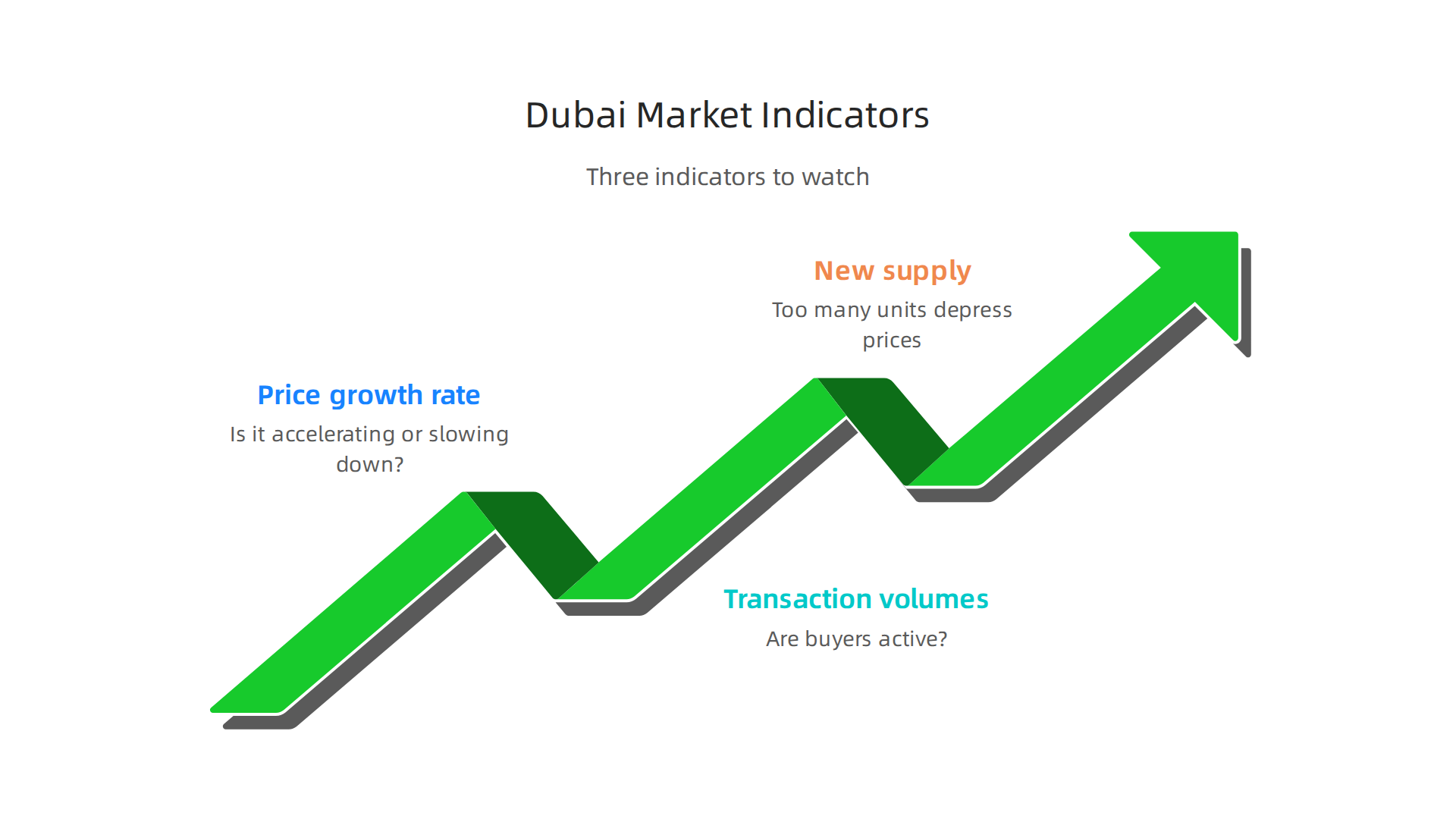
- Price growth rate. Is it accelerating or slowing down?
- Transaction volumes. Are buyers still active or pulling back?
- New supply coming online. Too many new units can push prices down.
Understanding these cycles helps you decide when to buy, when to hold, and when to sell. That is the difference between guessing and investing with confidence.
If you want to go deeper on using data to track these signals, check out this guide on big data analytics in Dubai real estate. It walks you through exactly how to read the numbers like a pro.
2. Essential Metrics: Rental Yields, Capital Appreciation, and ROI
Once you understand where the market cycle is headed, the next step is getting real about the numbers.

Three metrics matter most for any real estate investment: rental yield, capital appreciation, and total ROI. Let’s break them down in simple terms.
Rental Yields: Your Monthly Cash Engine
Gross rental yield tells you how much income your property generates each year compared to its purchase price. In 2026, Dubai’s average gross rental yield sits between 5% and 8%, which is strong compared to most global cities. But yields vary wildly by area.
Want the highest yields? Look at affordable communities. International City and Discovery Gardens can deliver up to 8% to 9% for smaller units, according to LuxHabitat’s community guide. One to three bedroom apartments across the city average between 5.86% and 5.11%, as GuestReady reports. Villa communities like Arabian Ranches and Dubai Hills offer lower headline yields, but they bring longer tenancies and fewer vacancy shocks, as Totality Estates explains.
Property Finder’s 2026 guide notes that affordable communities with lower purchase prices often produce higher yields. The Dubai Canal area offers a sweet spot, with yields ranging from 5.8% to 7.8% depending on views and unit type, per Dubai Canal’s investor outlook.
Capital Appreciation: The Long Game
Prices don’t rise evenly across the board. Some areas see double digit gains in a year; others barely move. Historical data shows that Dubai real estate can deliver solid long term appreciation, but short term dips happen. That’s why you need to track price trends by community, not just city wide averages.
Total ROI: The Real Picture
Many investors stop at rental yield and price growth. That’s a mistake. Your true return on investment includes transaction costs (like the 4% Dubai Land Department fee), service charges, maintenance, and potential vacancy periods. A property that looks great on paper can turn disappointing once you add up all the hidden costs.
To calculate your real ROI, subtract every expense from your rental income and appreciation, then divide by your total cash invested. That number tells you if a property is worth it.
If you want to master these calculations using live data, check out this guide on big data analytics in Dubai real estate. It walks you through exactly how to pull the numbers and spot the best opportunities.
3. Where to Invest: Top Districts and Property Types
Now that you understand the numbers, the next step is simple. Where should you actually buy?
Here is the truth in 2026. No single area works for every investor. Your choice depends on your goals. Do you want monthly cash flow? Or are you playing the long game for price growth? Let me walk you through the hotspots that matter right now.
Current Hotspots Worth Your Attention
Dubai South is a top pick. The Expo 2020 legacy continues to drive demand here. New infrastructure and business zones keep pulling people in. Prices are still reasonable compared to central areas.
Business Bay remains a cash flow machine. It sits right next to Downtown Dubai. Professionals love the location. One and two bedroom apartments here consistently rent well. The GuestReady report notes that one to three bedroom apartments across the city average between 5.86% and 5.11% gross yield. Business Bay often sits at the higher end of that range.
Jumeirah Village Circle offers a sweet spot. It is affordable. It is central. And it delivers solid yields. Many investors start here for good reason.
Dubai Creek Harbour is for the long term thinker. It promises a new downtown feel. Prices have room to grow as the area completes. Patience pays off here.
Property Type Match Your Profile
Here is a simple rule of thumb. Studios and one bedroom apartments are your best bet for high rental yield. They cost less to buy. They rent fast. And they appeal to the biggest tenant pool in Dubai, single professionals.
Villas are different. They offer lower headline yields. But they attract families who stay longer. Vacancy risk drops. As Totality Estates explains, villa communities like Arabian Ranches and Dubai Hills deliver fewer vacancy shocks. If you hate turnover, villas are worth considering.
The Off-Plan Opportunity and Risk
Buying off-plan can feel like a steal. Developers offer early bird discounts and flexible payment plans. But be careful. Completion delays happen. And the market can shift while you wait. Some experts warn that oversupply could temporarily drop prices by 10% to 15% in certain segments, as noted by international credit rating agencies. Off-plan works best if you have patience and a long holding period.
Want to spot the next hot area before everyone else? Start using data to track demand patterns. Check out this guide on big data analytics in Dubai real estate to learn how.
The right area paired with the right property type is half the battle. The other half is knowing your numbers, which you already learned in the previous section. You are closer than you think to making a smart move.
4. Navigating Legal Frameworks and Ownership Structures
You have picked the right area and the right property type. Now comes the part that trips up many first time buyers. The legal side. It sounds boring but get this wrong and your investment could turn into a headache.
Here is the good news. Dubai makes it fairly simple for foreigners to invest. You just need to know the rules.
Freehold vs Leasehold: The Big Distinction
Since 2002, Dubai has allowed foreign buyers to purchase property in designated freehold areas. This means you get full ownership rights. You can buy, sell, lease, or even leave the property to your family. The Dubai Land Department backs these rights, as Pearlshire explains.
Here is the catch. You cannot buy just anywhere. Foreigners can only purchase in designated freehold zones. According to Sands Of Wealth, there are over 100 freehold communities in 2026. Areas like Dubai Marina, Downtown Dubai, and Palm Jumeirah are freehold. Other parts of the city remain leasehold, meaning you get a long term lease but not the land.
Ownership Structures That Matter
You have three main ways to hold property in Dubai.
Direct ownership is the simplest. You buy the property in your name. This works well for most individual investors. You get a title deed from the Dubai Land Department.
SPV ownership means you set up a Special Purpose Vehicle, usually a company, to hold the property. This helps with tax planning and succession. But it costs more to set up and maintain.
Trust ownership is less common in Dubai but possible for estate planning. Talk to a lawyer if this interests you.
Real estate law restricts direct ownership to UAE nationals, GCC nationals, and companies fully owned by them. Foreigners access property through freehold rights in designated zones, as Baker McKenzie notes.
RERA and Escrow Accounts Keep You Safe
If you buy off-plan, the Real Estate Regulatory Authority (RERA) has your back. Developers must put your money into an escrow account. They cannot touch it until construction reaches certain milestones. This protects you from developers who might run away with your cash.
The Dubai Land Department publishes all rules and regulations online. You can check them yourself.
A 2026 Update on Investor Visas
One big change in 2026. Dubai removed the AED 750,000 minimum property value requirement for the two year investor visa. As KPMG reports, this makes it easier for more people to get a residency visa through property investment.
Here is the takeaway. You do not need to be a legal expert. You just need to stick to freehold areas, use a registered broker, and work with a good conveyancing lawyer. The rules are there to protect you.
Once you understand where you can buy and how to hold it, you are ready to move forward. Want to spot the safest freehold areas with the best growth potential? Using data to track demand patterns helps a lot. Check out this free data analytics course for Dubai real estate to learn how.
Understanding the legal framework is like knowing the rules of a game. Once you know them, you can play to win.
5. Financing Strategies: Mortgages, Cash, and Payment Plans
You know the legal rules and you have picked your spot. Now comes the big question. How do you actually pay for it? Your financing choice can make or break your real estate investment returns. Let me walk through the three main routes in 2026.
Mortgages and Islamic Finance
Most people use a mortgage. In Dubai, you have two solid options as Pearlshire explains. A conventional mortgage charges interest. An Islamic mortgage, called Murabaha, uses a profit rate instead. Both work the same way in practice.
For buy to let properties, lenders usually offer up to 75% loan to value (LTV). That means you need a 25% deposit. This lets you use leverage. You keep some cash free for other things like maintenance or buying another property.
The Power of Cash
Paying cash gives you real negotiation power. You can close fast. Sellers often prefer cash buyers and may drop the price. The trade off is that your capital is tied up. Some investors would rather use leverage and invest the rest in a REIT investment or a company property investment to spread risk.
Off-Plan Payment Plans
This is where Dubai really shines for investors. If you buy off plan, developers offer flexible payment schedules. You might pay 60% during construction and 40% when you get the keys. Or a 50/50 split. Some even let you pay 90% after handover. These plans help your cash flow a lot. It makes it easier to invest in Dubai without a huge upfront cost.
The 2026 Rate Picture
Interest rates and central bank policies still affect your monthly payments directly. A small rate change can shift your profit margin. You need to track the market so you lock in a good rate at the right time.
So how do you choose the right plan? It comes down to your budget and your timeline. Using real market data helps you make a smarter call. Learn how to time your financing decisions with this big data analytics guide for Dubai real estate.
Once your money is lined up, you are ready to move forward.

6. Off-Plan vs Secondary Market: Pros and Cons
So you have your financing lined up. Now you need to pick the right property type. Should you buy off-plan or a ready home in the secondary market? Each path has different rewards and risks. Your choice depends on your goals.
Off-Plan Properties: Lower Entry, Higher Upside
Buying off-plan means you purchase a property before it is built. Developers offer lower prices to attract early buyers. In fact, off-plan properties in Dubai usually cost 10-25% less than similar ready units in the same area, as Seven Mayfair explains. On top of that, many investors see 20-40% price appreciation by the time they get the keys, based on Pearlshire’s data. The flexible payment plans we talked about earlier also help your cash flow.
But there are trade-offs. You cannot walk through the unit before you buy. There is always some completion risk. The final quality might not match the brochure. And if the market slows down, your off-plan gains can shrink fast.
Secondary Market: Certainty and Income
Ready properties let you do a full physical inspection before you buy. You can start earning rental income right away. That makes them great for investors who want immediate cash flow. No waiting for construction to finish.
The downside is a higher upfront cost. Ready units usually come with a premium price. Sellers have less room to negotiate on price. You also miss out on the price jumps that off-plan buyers enjoy during construction.
How Market Cycles Affect Your Choice
Here is the key factor in 2026. When the market is rising, off-plan gains get amplified. You lock in a low price and watch the value climb before you even move in. That is a powerful move for your real estate investment returns.
But when the market is flat or correcting, the secondary market offers safety. You get a tangible asset with known value. You can generate income while you wait for prices to recover. If you are planning a company property investment or reit investment, the secondary market gives you more predictable numbers to work with.
Make Your Decision with Data
How do you know which cycle we are in right now? The answer comes from real market data. You need to track price trends, supply levels, and buyer demand. That is why big data analytics is so valuable for Dubai real estate. It helps you avoid guessing and make a smart call about timing.
If you want to learn how to read this data yourself, the free data analytics course for Dubai real estate can teach you the basics. You will understand when to buy off-plan and when to stick with ready properties. That knowledge is your edge.
7. Taxation and Cost Considerations
One of the biggest reasons people choose to invest in Dubai is the tax-friendly environment. There is no annual property tax, no capital gains tax, and no inheritance tax. That means more of your profits stay in your pocket. Compare that to other global cities where property taxes can eat up 1-3% of your property value every year. This advantage alone makes investment real estate in Dubai very attractive for long-term holding.
Of course, there are still costs you need to plan for. Let’s break them down.
One-time buying costs
When you buy a property in Dubai, you pay a one-time transfer fee to the Dubai Land Department (DLD). This fee is 4% of the purchase price. You will also pay small admin fees, usually between AED 500 and 1,000. And if you use a real estate agent, expect to pay a commission of about 2%. These costs add up, but they are paid only once.
For a more detailed look at how these fees compare between off-plan and ready properties, check out this off-plan vs resale guide by Seven Mayfair.
Ongoing costs every year
Even though there is no property tax, you will have to pay annual service charges. These cover maintenance of common areas, security, and amenities. Service charges vary widely by community. A villa in a premium development can cost AED 15-20 per square foot per year, while an apartment in a high-rise might be AED 10-15. You can find typical ranges in the Dubai Property Prices 2026 report from Anika Property.
Other ongoing costs include utilities (DEWA), internet, and a small reserve for unexpected maintenance. If you rent the property out, you will also need to budget for property management fees (usually 5-8% of annual rent).
Why understanding costs matters for your ROI
The best way to protect your real estate investment returns is to know your total cost of ownership before you buy. Many first-time investors only look at the purchase price and forget about service charges and one-time fees. That mistake can turn a good deal into a break-even one.
If you want to make data-driven decisions about costs and profitability, consider taking the free data analytics course for Dubai real estate. It will teach you how to calculate net yields and compare communities accurately.
The bottom line: Dubai’s tax structure gives you a huge head start. Just make sure you account for all the other costs so your investment stays profitable from day one.
8. Risk Management and Exit Strategies
No investment is completely risk-free, and real estate investment in Dubai is no different. Knowing the risks ahead of time helps you protect your money. Let’s look at the main ones and how to handle them.
Market risks to watch in 2026
The biggest risks include oversupply of new units, an economic slowdown, or changes to visa rules. If too many properties hit the market at once, prices can drop. An economic downturn could lower demand from renters and buyers. And visa policy shifts might affect the number of expats and investors coming to Dubai. A good overview of these dangers is in the Risks in Dubai Real Estate 2026 guide by Aeon & Trisl.
How do you protect yourself? Diversify. Don’t put all your money into one area or one type of property. Spread your investment real estate across different communities and asset classes. For example, mix a villa in Dubai Hills with an apartment in JLT. That way, if one market slows down, the other might still perform well.
Liquidity risk: can you sell when you need to?
Some communities take months to sell. That’s a liquidity risk. The best way to avoid it is to choose areas with high transaction turnover. Look at sales volumes on a trusted data platform before buying. The Dubai Off-Plan Investment Risks 2026 analysis by APIL Properties points out that exit liquidity is a major concern, especially during off-plan completion phases. Stick to established neighborhoods with strong resale activity.
Your exit strategy matters just as much as your entry
You need a plan for getting your money out. Here are three common ways to exit a real estate investment in Dubai:
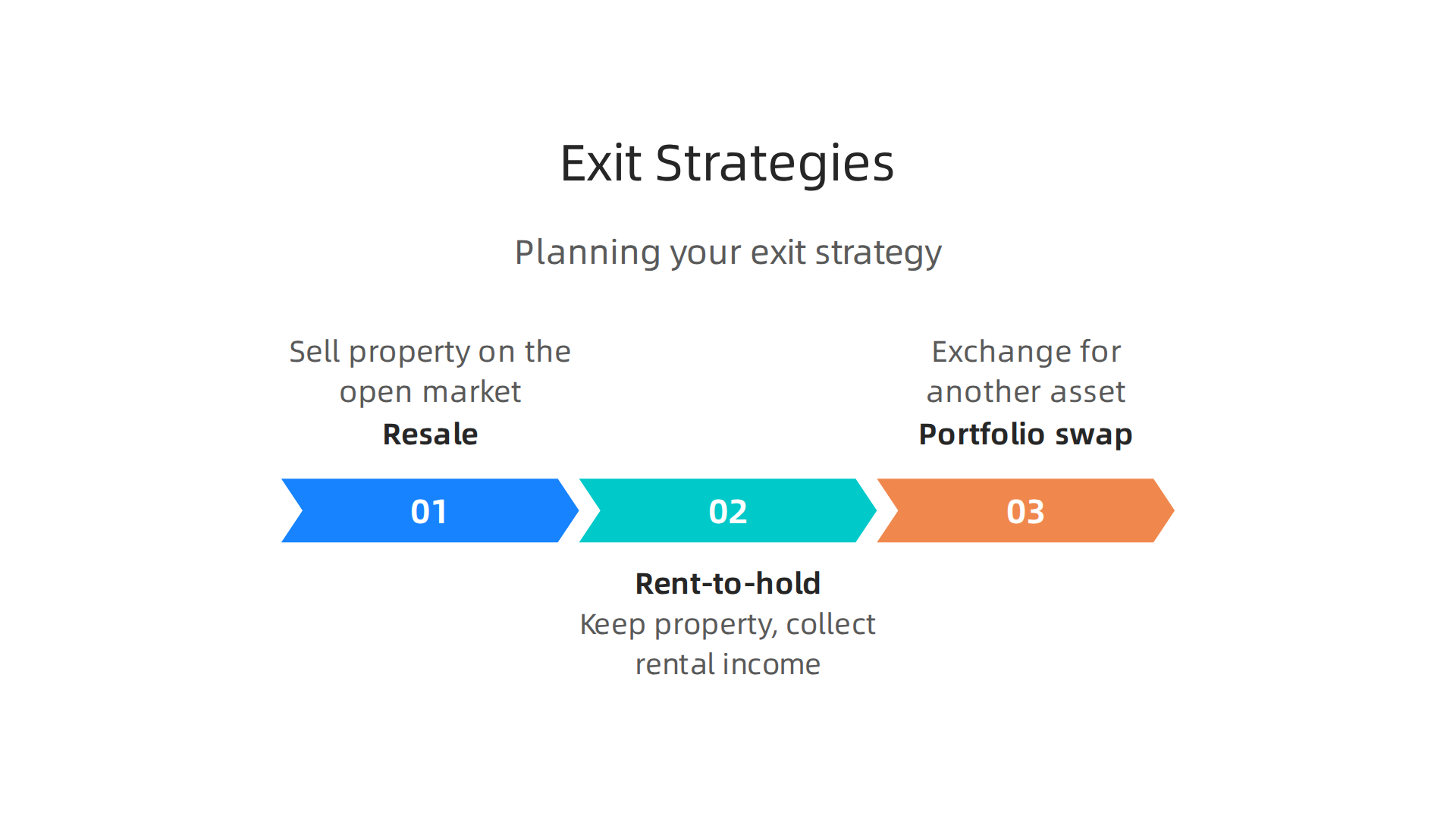
- Resale: Sell the property on the open market. Best when prices are high and demand is strong.
- Rent-to-hold: Keep the property and collect rental income. This works well during slower market cycles.
- Portfolio swap: Exchange your property for another asset, like a reit investment or a different unit, to rebalance your holdings.
The key is timing. Sell when the market cycle is peaking, and hold when it’s low. To make smart timing decisions, you need data. That’s why many successful investors learn how to read market numbers. The free data analytics course for Dubai real estate is a great place to start.
At the end of the day, the investors who do best in Dubai are the ones who manage risk and plan their exits ahead of time. Don’t just invest in Dubai without thinking about how you will leave. Know the risks, diversify, and use data to guide every move.
9. Leveraging Technology and Data Platforms
We just talked about managing risk and planning your exit. To actually do that well in 2026, you need the right tools. Gut feelings are not enough anymore. The investors who win in Dubai are the ones who use technology to make smarter decisions.
Proptech platforms give you real-time market intelligence
Platforms like Data Finder and Property Monitor let you see actual sales data and property valuations instantly. Instead of guessing what a property is worth, you can check what similar units sold for last week. This helps you avoid overpaying. It also protects your investment real estate from common pricing mistakes. Many global investors rely on this kind of data before they invest in Dubai. You can read more about what attracts them to the market in this overview of why global investors are choosing Dubai real estate in 2026.
AI tools predict what happens next
Artificial intelligence takes things further. It can predict rental demand, price trends, and the best timing for buying or selling. If supply is growing too fast in one area, the AI will flag it before prices drop. This kind of forewarning helps you exit before a downturn. To learn how to work with this data yourself, take a look at this guide on big data analytics in Dubai real estate.
Blockchain and tokenisation are changing ownership
Blockchain technology is making it easier to own property through fractional shares. Think of it like a reit investment, but you own a direct piece of a specific property. For a company property investment, this opens up flexibility. It also solves the liquidity problem we covered earlier. Instead of waiting months to sell a whole villa, you can sell your digital tokens faster.
The bottom line is clear. To make a smart real estate investment in Dubai in 2026, you must use data. It removes fear and replaces it with confidence. If you want to master these numbers, start with this free data analytics course for Dubai real estate. It will teach you exactly what to look for.
10. The 2026 Outlook and Future Trends
So where is the Dubai market heading next? The short answer is up, but not in a straight line. Smart investors in 2026 are watching three big forces that will shape every real estate investment decision this year.
Government plans keep demand strong for the long haul
Dubai’s leaders are not slowing down. The Dubai 2040 Urban Master Plan aims to double the population while making the city greener and more connected. That means decades of new homes, offices, and retail space will be needed. On top of that, the Golden Visa program continues to attract wealthy foreigners who want to live and work here. These policies create a solid floor under property prices. If you plan to invest in Dubai, you are betting on the government’s own bet in its future. You can see more about what drives long-term value in an earlier look at why global investors are choosing Dubai real estate in 2026.
More supply is coming, but quality will matter more
Developers are on track to complete over 30,000 new units in 2026. That sounds like a lot, and it is. But here is the key: the market is splitting in two. Luxury villas and branded residences in spots like Palm Jumeirah and Dubai Hills Estate keep soaring. Knight Frank expects prime prices to rise roughly 3% this year, while the broader market may cool a bit after a huge 60% run‑up from 2022 to early 2025. Meanwhile, affordable apartments in new suburban areas face more competition. Choosing the right location and quality level is more important than buying any unit you find. The Dubai Property Market Expert Forecast actually projects an 8–12% price increase across prime districts this year, so the best properties still have room to run.
Lower rates and a stronger world economy help everyone
Interest rates are expected to stabilise in 2026 after the big hikes of 2023–2024. That makes mortgages cheaper and encourages more buyers to jump in. At the same time, global economic growth, while slower than before, is still positive. CBRE forecasts US GDP growth of 2.0% this year, which supports investor confidence worldwide. When the global mood is good, money flows into markets like Dubai.
Bottom line for 2026
The data says now is still a good time to buy, but you need to be picky. Focus on areas with real demand, check the numbers before you commit, and keep one eye on the government’s long‑term plans. To dive deeper into the numbers that matter, explore how to use data‑driven insights for your next Dubai purchase. The future belongs to investors who prepare today.
Summary
This guide explains how to invest in Dubai real estate in 2026 using data, practical checks, and clear rules of thumb. It walks through the current market cycle—showing why strong transaction volumes can coincide with slower price growth—and identifies the indicators you should track before buying. You’ll learn how to calculate rental yields, capital appreciation, and true ROI after fees and service charges, and which districts and property types suit cash‑flow or long‑term growth goals. The guide also covers legal ownership routes for foreigners, recent investor‑visa changes, financing options (including typical LTVs and off‑plan payment plans), and the pros and cons of off‑plan versus ready properties. Finally, it gives risk management strategies, exit options, and shows how proptech and big‑data tools can sharpen your timing. After reading, you’ll know which numbers to check, where to look, and how to make a more confident, data‑backed investment decision in Dubai.